| Come and experience the hudge bio-diversity of
climate, flora and fauna which make up our 4 National Parks of the Andean
Region. They have a total area of about 1,500,000 acres.
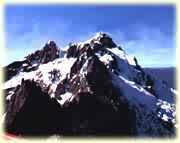 The most important, and most frequently visited is the Sierra
Nevada National Park, with about 130,000 acres, and more than 45 lagoons and
waterfalls. This park provides a wide variety of plants and animals. The most important, and most frequently visited is the Sierra
Nevada National Park, with about 130,000 acres, and more than 45 lagoons and
waterfalls. This park provides a wide variety of plants and animals.
 Sierra Nevada National Park Sierra Nevada National Park
The Sierra Nevada National Park is a must see for anyone who enjoys being outdoors. It is a great chance to look at a whole variety of wildlife that you may not have previously seen before. If you are travelling to Venezuela, perhaps you have found a flight to Alberto Carnevalli Airport via a price comparison website such as Fly.com, then a stop here should definitely be made. The stunning scenery and the fresh air will take you to the heart of Venezuela.
With 130,000 acres of beautiful land, this park is within the States of both Merida
and Barinas. Here, you can see hydro, botanic and mineral reserves of great
strategic national importance. The largest lagoon in the park is Mucubaji
Lagoon, and behind it, you’ll see majestic Mucunuque Peak, at 16,871
f.a.s.l. If you follow the different natural trails you’ll come
upon: Black Lagoon, Ducks Lagoon, and many others. If you don’t care
to walk, you can rent a horse.
Tapo Caparo National Park
Tapo Caparo connects Sierra Nevada National Park and the hydro reserve of Uribante and
Caparo Rivers, both beautifuls rivers. Tapo Caparo has 410,000 acres (210,000
in the State of Barinas and 200,000 in the State of Merida).
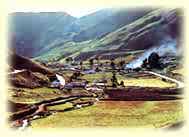 Sierra de La Culata National Park Sierra de La Culata National Park
Here you will find beautiful, desert like, paramos and spectacular glacier lagoons. The
park is located in the southern part of the State of Merida and is home to our Andean
Condor, one of the world’s largest birds.
Visit the beautiful Mucunturia. Mucu means “place of” and “tur”
means Condor, in the old language of our first inhabitants. Combatiente, the only captive
Condor in the area is located here where you can get a close-up look at this
magnificant animal.
WILD LIFE
 There are wide variety of animals in the Andes
Mountains, and with the assistance of a good guide, you will be able to see many of
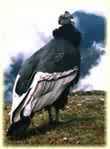
them. Most impressive, is the Andean Condor, the largest flying bird in the world.
When standing, this magnificant creature can reach a height of 5 feet! When fully
extended, it’s wingspan can measure more than nine feet! The Andean Condor
lives in these mountains at elevations between nine and fifteen thousand feet, and can fly
at a speeds of more than 40 miles per hour! There are wide variety of animals in the Andes
Mountains, and with the assistance of a good guide, you will be able to see many of
them. Most impressive, is the Andean Condor, the largest flying bird in the world.
When standing, this magnificant creature can reach a height of 5 feet! When fully
extended, it’s wingspan can measure more than nine feet! The Andean Condor
lives in these mountains at elevations between nine and fifteen thousand feet, and can fly
at a speeds of more than 40 miles per hour!
At lower elevations you will see many different
species of tropical birds in a wide variety of colors, shapes and sizes. If you visit the
Santo Domingo Region, you can spend around 45 minutes each, at the various elevations,
where you will observe the different kinds of: vegetation, temperature, and humidity,
which of course determines which species live, feed, and reproduce in those areas.
Listen to the loud screams of the monkeys and watch for the brilliant coloring of the
“Cock of the Rocks”, an impressive orange colored bird that lives only in a few
parts of Venezuela. Other species of interest will be the Hummingbird, Sunangel, and
the Rose Headed Parakeet.
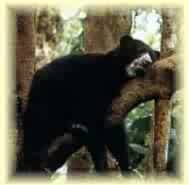 In our mountains, are also a few
species which are in danger of extinction, like the Frontino Bear and the White tailed
deer (not to be confused with the deer of the same name, but found in the Northern
Hemisphere). If you should be so lucky to come upon one of these rare animals,
please keep your distance, and quietly move away, in an effort to give them their
privacy. It may be breeding time, and your sudden intrusion could
freighten them to the point where they could miss the opportunity to pro-create. In
years to come, their numbers may increase where they are no longer in danger of
extinction; and a large part of the reason, could be your thoughtfullness. In our mountains, are also a few
species which are in danger of extinction, like the Frontino Bear and the White tailed
deer (not to be confused with the deer of the same name, but found in the Northern
Hemisphere). If you should be so lucky to come upon one of these rare animals,
please keep your distance, and quietly move away, in an effort to give them their
privacy. It may be breeding time, and your sudden intrusion could
freighten them to the point where they could miss the opportunity to pro-create. In
years to come, their numbers may increase where they are no longer in danger of
extinction; and a large part of the reason, could be your thoughtfullness. |